
Workers’ Compensation Insurance:
Protect your employees and your business with Workers' Compensation Insurance that covers workplace injuries, medical costs, and lost wages.
What is Workers’ Compensation Insurance?
Workers’ compensation insurance provides financial protection for employees injured or disabled on the job while shielding employers from lawsuits related to workplace injuries. It covers medical expenses, lost wages, rehabilitation costs, and death benefits for work-related injuries or illnesses.
Workers’ comp is a legal requirement in nearly all states, ensuring a fair balance between employee protection and employer liability management.

Key Coverages in Workers’ Compensation Insurance
1. Medical Coverage
Pays for medical expenses related to work-related injuries or illnesses, including:
- Doctor visits
- Hospital stays
- Prescription medications
- Physical therapy
Example:
If an employee injures their back lifting heavy equipment, workers’ comp covers their medical treatment and rehabilitation costs.


2. Lost Wages
Provides partial wage replacement for employees who cannot work due to a covered injury or illness. Benefits are typically a percentage of the employee’s average weekly wage.
Example:
If an employee is unable to work for two months due to a broken leg sustained on the job, workers’ comp provides income support during their recovery.
3. Disability Benefits
Covers temporary or permanent disability resulting from workplace injuries. Benefits depend on the severity of the disability:
- Temporary Disability: Covers lost wages during recovery.
- Permanent Disability: Provides long-term benefits if the employee cannot return to work.
Example:
If an employee suffers permanent hearing loss due to prolonged exposure to loud machinery, workers' comp provides ongoing financial support.


4. Death Benefits
Provides financial support to the family of an employee who dies due to a work-related injury or illness. This includes funeral costs and income replacement for dependents.
Example:
If an employee dies in a workplace accident, workers’ comp pays funeral expenses and supports their family financially.
5. Rehabilitation and Retraining
Covers vocational rehabilitation services and retraining programs for employees unable to return to their previous job due to injury.
Example:
If an injured construction worker cannot perform physical labor anymore, workers’ comp may cover retraining for an office-based role.

Coverage A vs. Coverage B

Coverage A: Employee Benefits
Provides state-mandated benefits for injured employees on a no-fault basis. It covers medical care, lost wages, disability benefits, rehabilitation, and death benefits.
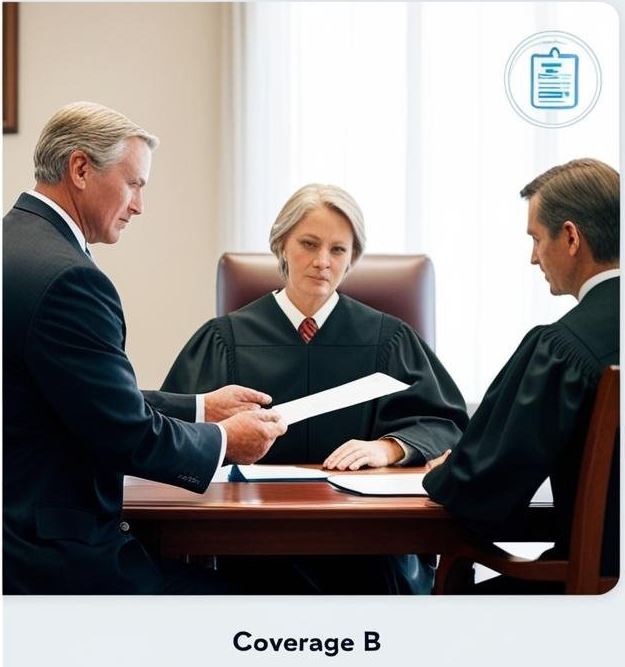
Coverage B: Employer Liability
Protects employers against lawsuits if they are found negligent in causing an employee’s injury. Coverage B pays additional damages beyond Coverage A benefits.
Example: If an employer fails to provide proper safety equipment and an employee is injured, Coverage B protects the employer from significant legal costs.
What’s Not Covered by Workers’ Compensation Insurance?
Workers compensation does not cover:
- Injuries caused by willful misconduct (e.g., intoxication or illegal activities).
- Self-inflicted injuries.
- Injuries resulting from non-work-related activities.
- Pre-existing conditions aggravated by work duties.
Why Choose Us?
With so many options available for workers’ compensation insurance, finding the right policy can be overwhelming. That’s where we come in:
- We compare quotes from multiple carriers to find cost-effective coverage tailored to your business needs.
- Our licensed agents provide personalized advice based on your industry and state regulations.
- As a virtual agency, we save you time and money—no broker fees when you buy online!
Protect your employees and your business with tailored workers’ compensation insurance solutions.
FAQS
We have workers compensation insurance to protect both employees and employers when workplace injuries or job related illnesses happen. Instead of employees having to sue their employer to get medical bills and lost wages paid, workers compensation provides a predictable system of benefits. It helps injured workers get treatment and income support quickly, and it reduces legal battles for everyone involved.
For employers, workers compensation insurance is a key part of risk management. It helps cover medical costs, disability benefits, and legal expenses tied to workplace injuries. In most states, it is also required by law once you have employees. Without workers compensation in place, one serious injury could create a financial strain that threatens the entire business.
Companies need workers compensation insurance because people get hurt at work even in relatively “safe” industries. Slips, repetitive strain injuries, lifting injuries, and accidents can happen in offices, stores, warehouses, and job sites. Workers comp insurance is there to pay for medical care, partial wage replacement, rehabilitation, and, in tragic cases, death benefits.
From a legal standpoint, most states require companies with employees to carry workers compensation coverage. Failing to carry workers comp can lead to fines, penalties, personal liability for owners, and even criminal charges in some jurisdictions. For companies that want to protect their people, stay compliant, and operate responsibly, workers compensation insurance is not optional. It is a core business protection.
You have workers compensation insurance so your business is ready when something goes wrong. It allows you to:
- Take care of injured employees with medical treatment and wage benefits
- Reduce the risk of lawsuits and unpredictable legal costs
- Show staff and regulators that you take workplace safety and compliance seriously
Even if you run a small business and think your risk is low, one back injury or fall can lead to big medical bills and extended time off work. Workers comp helps you handle those costs through insurance instead of out of pocket. Savon Insurance Brokerage can help you set up workers compensation coverage that fits the size and type of your business.
If you are a business owner with employees, you almost always need workers compensation insurance for three main reasons:
- Legal requirement:
In most states, once you hire one or more employees, workers comp coverage is required by law. The exact rules and thresholds vary, but very few employers are truly exempt. - Employee protection:
Workers comp helps your employees get medical care, rehabilitation, and part of their wages if they are injured on the job or develop a job related illness. - Business protection:
The policy helps shield your business from large injury claims, legal expenses, and potential fines for non compliance.
Even if your state offers some flexibility for owners and officers, carrying workers compensation insurance shows that you run a professional and responsible operation. Savon can review your situation and explain whether coverage is mandatory for you and why it is still smart protection even when you have a choice.
Workers compensation insurance is provided by:
- Private insurance companies that are licensed to write workers comp in your state
- State run workers compensation funds in some states, where the government operates a workers comp program
- Assigned risk or residual market plans that provide coverage to employers who cannot find coverage in the regular market
As a business owner, you typically do not contact every carrier directly. Instead, you work with an independent broker such as Savon Insurance Brokerage. We identify insurers that offer workers comp in your state, present your payroll and industry information to them, and bring back quotes from companies that are willing to cover your business.
The employer pays for workers compensation insurance. Workers comp premiums are a business expense and are not usually deducted from an employee’s paycheck. The cost is calculated based on your payroll, type of work, and other rating factors, and you as the business owner or management team are responsible for paying that premium.
Employees may have some claim related costs, such as co pays for medical visits in certain situations depending on state rules, but the cost of the policy itself is on the employer side. Savon can help you budget for workers comp and show you how different payroll levels and classifications affect what you pay.
Workers compensation insurance typically covers:
- Employees on your payroll, including full time and part time staff
- Some seasonal or temporary workers, depending on state law and how they are classified
- In certain situations, owners, partners, and corporate officers if they are included under the policy
Coverage applies when an employee suffers a work related injury or illness that arises out of and in the course of employment. It can also cover certain occupational diseases and repetitive stress injuries.
Independent contractors are usually not covered unless they are misclassified or state rules treat them differently. Because worker classifications can be complex, Savon Insurance Brokerage can help you review who should be covered under your workers compensation policy based on your state’s rules and how your people actually work.
You need workers compensation insurance if:
- You have one or more employees in a state where workers comp is required by law
- You operate in an industry with physical work, such as construction, retail, hospitality, transportation, or manufacturing
- You have staff who perform tasks that could reasonably lead to injuries, even in an office environment
In some states, even sole proprietors or partners may choose to buy workers compensation coverage to protect themselves while working for larger clients or on certain contracts. Some job contracts and vendor agreements also require proof of workers comp coverage before you can work on a project.
Savon can help you confirm whether you are legally required to carry workers comp, whether you need coverage to satisfy contracts, and whether optional coverage for owners or subcontractors makes sense in your case.
Workers compensation insurance premiums are paid by the employer, not the employee. You as the business owner or company representative:
- Apply for coverage
- Receive the premium quotes
- Pay the initial and renewal premiums
- Handle any adjustments after the annual audit
Premiums are based on your estimated payroll for the policy period and then adjusted at audit to match your actual payroll. Savon Insurance Brokerage can help you understand your premium breakdown, including how much each class of employee contributes to the total cost.
You can buy workers compensation insurance:
- Through an independent insurance brokerage like Savon Insurance Brokerage, which can access multiple carriers and state programs
- From captive agents who sell policies for a single insurance company that offers workers comp
- Directly from certain state funds or state run workers compensation programs in states where those exist
Using an independent broker is usually the easiest and most efficient option, especially if you are not sure which carriers write workers comp in your state. Savon will gather your business details once, approach several insurers, and help you compare coverage, rates, and payment plans, instead of you having to call each carrier individually.
You get workers compensation insurance wherever licensed insurers and agents are allowed to operate in your state. Practically speaking, this means:
- Contacting an independent brokerage like Savon Insurance Brokerage
- Asking us to shop workers comp coverage based on your payroll, industry, and claims history
- Reviewing quotes from carriers that are willing to insure your type of business
We will help you complete the application, set up your policy, and provide certificates of insurance that you can give to clients, landlords, and state agencies as needed. You do not need to navigate state funds, private carriers, and assigned risk plans on your own. Savon does that behind the scenes for you.
You can get workers compensation insurance from:
- Savon Insurance Brokerage as your broker, with access to multiple workers comp carriers
- Local or regional agencies that write commercial insurance
- State run funds or assigned risk programs if your business does not qualify for coverage in the standard market
Regardless of where you get it, your goal should be the same: a workers compensation policy that meets legal requirements, fits your budget, and provides clear protection for your employees. Savon focuses on making that process straightforward by handling the quoting, paperwork, and ongoing support.
You should get workers compensation insurance:
- Before you hire your first employee, if your state requires coverage immediately once you have staff
- As soon as you sign contracts that require proof of workers comp
- Before you start work on projects where general contractors or clients demand certificates of insurance
The best time to get workers compensation is not after an injury has already happened. You want coverage in force the day employees begin working for you. Savon can help you line up workers comp when you are planning to hire, so there is no gap between your first payroll and your legal obligations.
Workers compensation insurance is required when:
- State law mandates coverage once you reach a certain number of employees, which in many states is one or more
- Your business is in an industry where workers comp is compulsory regardless of size
- Your contracts, leases, or client agreements require it as a condition of doing business
Each state has its own workers compensation rules, so the exact threshold and exemptions can be different. However, in most cases, if you pay people as employees rather than independent contractors, workers comp will be required.
Savon Insurance Brokerage can review your state’s rules with you and help you understand exactly when your obligation to carry workers compensation insurance begins.
Workers compensation insurance in the USA is a state regulated insurance system that provides benefits to employees who are injured or become ill because of their work. While details vary by state, the main idea is consistent:
- Employees receive medical care and wage replacement benefits for job related injuries and illnesses
- Employers receive some protection from lawsuits related to those injuries and illnesses
In most states, employers are required by law to carry workers compensation insurance once they have employees. Each state sets its own rules for benefits, covered conditions, and how premiums are calculated. Savon can help you navigate workers compensation requirements in the states where your business operates and find insurance carriers that write workers comp policies there.
The cost of workers compensation insurance depends on several factors, including:
- Your industry and job classifications
- Your total payroll and how it is distributed across job types
- Your claims history, which is reflected in your experience modification factor if applicable
- The state where your employees work
- Any safety programs or credits you qualify for
Workers comp premiums are generally calculated as a rate per 100 dollars of payroll for each job classification. Higher risk jobs, such as construction or manufacturing, have higher rates than low risk office work. If your business has had more or more severe claims than average, your cost can be higher as well.
Savon Insurance Brokerage can estimate your workers compensation cost based on your payroll and class codes, then help you compare quotes from multiple carriers so you see real pricing instead of just generic averages.
Workers compensation insurance covers work related injuries and illnesses suffered by your employees. Covered benefits often include:
- Medical expenses: doctor visits, hospital stays, surgery, medications, and rehabilitation
- Wage replacement: a portion of the employee’s lost wages while they are unable to work due to a covered injury
- Disability benefits: payments for partial or permanent disability when an injury limits or ends the worker’s ability to work
- Vocational rehabilitation: help with retraining or job placement if the worker cannot return to their previous role
- Death benefits: payments to dependents if a worker dies from a job related injury or illness
Workers comp policies may also include an employer’s liability component, which helps protect your business if you are sued over a workplace injury under certain circumstances. Exact coverage details vary by state. Savon can walk you through what your workers compensation policy will cover in your location.
Workers compensation insurance is a type of business insurance that provides benefits to employees who are injured or become ill because of their job, and it protects employers from many injury related lawsuits. It is a key part of the employer employee relationship in the United States and is governed by state law.
In simple terms, workers comp:
- Pays for medical care and a portion of lost wages for injured employees
- Provides disability and death benefits when appropriate
- Reduces legal disputes by providing a defined benefit system
- Helps employers meet legal obligations and avoid large out of pocket injury costs
If you hire employees, workers compensation insurance is usually one of the first coverages you should put in place. Savon Insurance Brokerage specializes in helping businesses understand and purchase workers comp coverage that matches their payroll and risk profile.
Workers compensation insurance works as a no fault system for workplace injuries. Here is the basic process:
- An employee is injured or becomes ill due to their job.
- The injury is reported to the employer and then to the workers compensation insurer.
- The insurer investigates the claim to confirm it is work related and covered by the policy.
- Medical treatment and benefits are approved according to state guidelines. The insurer pays covered medical bills directly and provides wage replacement benefits if the employee cannot work.
- The employee recovers and returns to work, sometimes with modified duties, or receives ongoing disability benefits if they cannot return fully.
In exchange for this guaranteed benefit system, employees usually give up the right to sue their employer for negligence in most circumstances. Workers comp is designed to be faster and more predictable than traditional lawsuits. Savon can help you set up policies and procedures so that when an incident happens, everyone understands how to report and handle workers compensation claims.
To buy workers compensation insurance:
- Gather your business information:
Prepare details about your company, including legal name, addresses, type of work, number of employees, payroll by class of work, and prior loss history. - Contact an independent broker like Savon Insurance Brokerage:
Share your information with us once. We will identify appropriate workers comp carriers in your state and send them your risk details. - Review quotes and terms:
We will bring back quotes from one or more insurers, explain the rates, classifications, and any special terms, and answer your questions in plain language. - Choose a policy and bind coverage:
Once you select an option, we will complete any remaining forms, set up billing, and send you proof of workers compensation insurance for your records and for any clients or state agencies that require it.
Buying workers compensation does not have to be complicated. Let Savon walk you through the steps so you get strong coverage and stay compliant with state law.
The amount of workers compensation insurance you need is not usually expressed as a simple limit you choose, like liability coverage. Instead, it is defined by your state’s laws and by your payroll and job classifications. You must:
- Cover all required employees
- Ensure payroll is reported accurately by class code
- Comply with state required benefit levels and policy conditions
You do not choose a dollar limit for medical benefits or wage benefits in the same way you choose property limits. Those are set by statute. Your primary choice is to include or exclude certain owners or officers where allowed, and to choose the correct classification codes for each type of work in your company.
Savon will help you determine which employees must be covered, whether you should include or exclude owners, and how to classify your payroll. That way your workers compensation coverage is sized correctly for your business and meets state requirements.
To get workers compensation insurance in place for your business:
- Reach out to Savon Insurance Brokerage:
Call or email us with your basic business details, or fill out a workers comp quote request form if you have one on your site. - Provide payroll and operations information:
We will ask about your employees, their roles, estimated payroll by job type, and any current or prior coverage. - We shop the market for you:
Savon will approach workers compensation insurers that write business in your state and gather quotes tailored to your company. - Choose your carrier and start coverage:
Once you select an insurer, we will finalize the application, issue the policy, and provide proof of workers compensation insurance that you can use for compliance and contracts. - Stay supported all year:
We help you with audits, classification questions, and claims issues as they arise, not just at renewal time.
Getting workers compensation insurance is an important step for any employer. Savon Insurance Brokerage makes it easier by guiding you through each stage and making sure you have the coverage you need to protect your people and your business.