
Commercial Property Insurance for Landlords:
Protect your building, equipment, and inventory with Commercial Property Insurance built for real business risks
What is Commercial Property Insurance for Landlords?
Commercial property insurance protects landlords’ real estate investments from unexpected events like fire, theft, vandalism, or natural disasters. It also includes liability coverage to safeguard landlords from lawsuits related to tenant injuries or property damage. Whether you own a single rental property or a portfolio of commercial buildings, this policy ensures your business remains financially secure.
Key Coverages for Commercial Landlords
1. Property Coverage
Protects the physical structure of your rental property and assets used to service the premises. This includes:
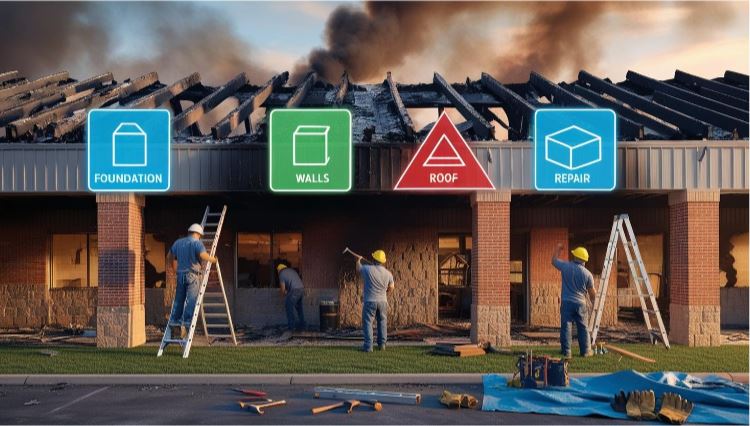
- Building Coverage: Covers the structure itself, including walls, roof, foundation, and permanently installed fixtures.
Example: If a fire damages your building’s roof and walls, this coverage pays for repairs. - Business Personal Property Coverage: Protects items you own that are used to service the property (e.g., lawnmowers, appliances).
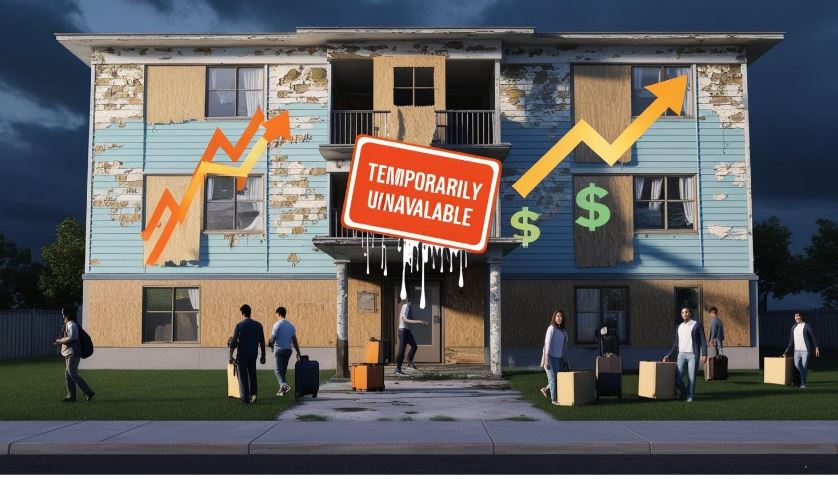
Example: If a hailstorm damages outdoor equipment used to maintain the premises, this coverage reimburses repair costs. - Loss of Rental Income Coverage: Reimburses lost rent if your property
becomes uninhabitable due to a covered event.
Example: If water damage forces tenants to vacate while repairs are underway, this coverage helps you recoup lost rental income.
2. Liability Coverage
Liability protection safeguards landlords from third-party claims related to:
- Bodily Injury: Covers medical expenses and legal fees if someone is injured on your property.
Example: If a tenant slips on icy steps outside your building and sues you, liability coverage pays for their medical bills and legal defense. - Property Damage: Pays for damages caused by your building or operations to neighboring properties.
Example: If a fire in your building causes smoke damage to a neighboring
business, liability coverage compensates them for repairs. - Legal Defense Costs: Covers legal fees if you’re sued for bodily injury or property damage.
Optional Add-Ons
- Customize your policy with endorsements tailored to specific risks:
Flood Insurance: Protects against water damage caused by flooding events.
- Earthquake Insurance: Covers structural damage caused by seismic activity.
- Vandalism Coverage: Protects against intentional damage caused by tenants or others.
- Vacant Property Endorsement: Provides coverage for properties temporarily unoccupied.
Replacement Cost vs. Actual Cash Value
Replacement Cost (RC):
Pays for repairs or replacements using materials of similar quality without deducting depreciation.
Example: If a storm destroys $50,000 worth of building materials, RC coverage reimburses the full $50,000 needed for replacement.
Actual Cash Value (ACV):
Pays for repairs or replacements minus depreciation.
Example: If the same materials have depreciated to $35,000 in value, ACV coverage reimburses only $35,000.
Recommendation:
While ACV policies have lower premiums, RC policies provide better protection for high-
value assets.
Why Choose Us?
With so many options available for landlord insurance, finding the right policy can be overwhelming. That’s where we come in:
- We compare quotes from multiple carriers to find the best coverage at
competitive rates. - Our licensed agents provide personalized advice based on your property type and location.
- As a virtual agency, we save you time and money—no broker fees when you buy online!
Protect your rental properties with tailored commercial property insurance solutions that include liability protection.
FAQS
Commercial property insurance can feel expensive because it is designed to pay for very large losses. If a fire, hurricane, vandalism, or burst pipe severely damages your building, equipment, or inventory, the repair or replacement cost can easily reach hundreds of thousands or even millions of dollars. Your premium is the price of transferring that financial risk to an insurance company.
Several factors drive the cost of commercial property insurance:
- The replacement cost of the building and business contents
- Your industry and operations (a restaurant has different risks than an office)
- Your location, including crime levels and exposure to wind, hail, wildfire, or hurricanes
- The building’s age, construction type, and condition
- Your deductibles, coverage limits, and special endorsements
- Your claim history
On top of that, construction costs, labor, materials, and catastrophe losses have increased in many areas, which pushes premiums higher. At Savon Insurance Brokerage, we help you understand what is driving your commercial property insurance premium and look for ways to balance strong protection with a realistic budget.
Commercial property insurance is sold by:
- Independent insurance brokerages, like Savon Insurance Brokerage, that represent multiple insurance companies and can compare coverage options and prices for you
- Captive agents who represent a single insurance carrier
- Direct insurance companies that sell commercial policies online or by phone
Because commercial property coverage is more complex than a personal home policy, it is often best to work with an independent broker. Savon can place coverage with several different commercial insurance carriers, explain the differences in policy forms, and help you build a property program that actually matches your building, your lease agreements, and your business needs.
Commercial property insurance is written by insurance companies that specialize in commercial lines. These can include:
- Large national insurers with dedicated commercial property divisions
- Regional carriers that focus on certain states or industries
- Specialty companies that handle higher risk properties or certain types of occupancy (like hospitality, manufacturing, or habitational risks)
As a business owner, you typically do not contact all of these insurers one by one. Instead, you work through a broker such as Savon Insurance Brokerage. We work with a network of commercial property insurers, present your building and operations to them correctly, and bring back quotes from carriers that fit your risk profile and location.
Who pays for building insurance on a commercial property usually depends on who owns the building and what the lease agreement says.
- If you own the building and occupy it, you are usually responsible for the commercial property insurance on the structure, as well as coverage for your own business contents.
- If you are a landlord leasing space to tenants, you typically insure the building and common areas. Your tenants insure their own business personal property and sometimes tenant improvements.
- If you are a tenant, your lease may require you to pay a share of the landlord’s building insurance as part of CAM (common area maintenance) charges, or it may require you to carry a tenant policy that covers improvements and glass.
Leases can also require certain minimum property limits, loss of rent coverage, or additional insured status. Savon Insurance Brokerage can review your lease and help clarify who should insure what, so there are no dangerous gaps between landlord and tenant responsibilities.
You need commercial property insurance if you:
- Own a commercial building such as an office, retail center, warehouse, restaurant, or motel
- Lease space but have valuable business personal property like inventory, machinery, furniture, or computers
- Have tenant improvements and betterments you paid for, such as custom build outs or fixtures
- Rely on a physical location to operate your business or store your equipment
Even if you do not own the building, commercial property insurance is important. A fire, theft, storm, or burst pipe can destroy your inventory and equipment. Without property coverage, your business may not have the funds to recover.
Savon can help building owners, landlords, and tenants identify exactly which buildings, improvements, and contents need to be insured, and then tailor commercial property coverage to those exposures.
You can get commercial property insurance:
- Through an independent brokerage like Savon Insurance Brokerage, which can shop multiple insurers for you and explain coverage options
- Through captive agents of a single company that sells commercial property policies
- Directly from some online insurers that provide simple commercial packages
Because commercial property policies can be customized with different limits, coinsurance clauses, valuation methods, and extensions, it is smart to use a broker who understands the details. Savon will gather information about your building, contents, operations, and leases, and then approach several commercial property insurers to secure the right blend of coverage and cost.
The cost of commercial property insurance varies widely. It depends on:
- The value of the building and the cost to rebuild it
- The value of your business personal property
- Your location and exposure to weather, crime, and catastrophe risk
- The construction type, age, and condition of the property
- The occupancy (what the building is used for)
- Your deductible and policy limits
- Previous claims history
A small office condo in a low risk area will have a very different premium than a large frame constructed hotel in a hurricane zone. Some businesses pay a few thousand dollars per year for basic commercial property coverage, while larger or higher risk properties can pay much more.
The most accurate way to understand your cost is to request a custom quote. Savon Insurance Brokerage can take your building details, current limits, and coverage needs and return real numbers from multiple insurers instead of relying on generic averages.
Commercial property insurance is often referred to as:
- Commercial Property Insurance
- Business Property Insurance
- Commercial Building Insurance
- Part of a Commercial Package Policy (CPP)
- Part of a Business Owners Policy (BOP) when bundled with liability and business income
All of these terms describe coverage that protects a business’s physical assets, like buildings, improvements, equipment, inventory, and furniture, from covered causes of loss. The exact label on your policy is less important than what it covers. Savon helps you look beyond the name and understand the actual property coverage form being used for your business.
Commercial property insurance typically covers business owned physical assets against a list of covered causes of loss. For most businesses, this includes:
- Buildings you own, including structures, foundations (subject to policy language), fixtures, and sometimes permanently installed machinery
- Business personal property such as furniture, inventory, stock, equipment, computers, tools, and supplies
- Tenant improvements and betterments you have paid for if you are a tenant
- Outdoor property such as signs, landscaping, and fences, often with specific limits
Covered causes of loss often include:
- Fire, lightning, and explosion
- Certain types of water damage from burst pipes or sprinkler leakage
- Windstorm, hail, and some weather related losses (with variations by location)
- Theft and vandalism
- Smoke, vehicles, and aircraft
Commercial property insurance can also be endorsed to include:
- Business income and extra expense
- Equipment breakdown
- Spoilage, glass, and more
Savon Insurance Brokerage can show you what your current policy covers and suggest changes to better match your business’s actual property exposures.
Commercial property insurance covers direct physical loss or damage to your insured property from covered causes of loss. In plain language, that means it helps pay to repair or replace:
- The building or structure you insure
- Business personal property inside or near that building, such as inventory, furniture, machinery, and stock
- Some limited outdoor property, depending on the policy and endorsements
- Tenant improvements and betterments you have installed as a renter
It responds when a covered event happens. For example:
- A fire damages your warehouse
- A lightning strike causes electrical damage
- A windstorm tears part of your roof and rain damages contents
- A burst pipe floods your office and ruins flooring and equipment
- Thieves break in and steal computers and inventory
Commercial property insurance does not cover every possible risk. Flood, earthquake, wear and tear, mechanical breakdown, and intentional damage are common exclusions and usually require separate or additional coverage. Savon will help you identify those gaps and, where needed, add flood insurance, earthquake coverage, or equipment breakdown insurance to your commercial program.
Commercial property insurance is coverage that protects the physical assets of a business. It is the business equivalent of property coverage for a home, but designed around the way companies use buildings and equipment.
A commercial property policy:
- Insures buildings, business personal property, and sometimes loss of income
- Responds when events like fire, theft, vandalism, or certain weather events cause physical damage
- Can be written on its own or combined with liability coverage in a package or Business Owners Policy
This coverage is essential if your business owns or leases physical space, uses expensive equipment, keeps inventory, or stores customer property. Savon Insurance Brokerage specializes in helping business owners understand and customize commercial property insurance so it truly reflects the property they rely on.
To get commercial property insurance for your business:
- Gather basic property information
You will need details such as the address, square footage, year built, construction type, roof age, fire protection features, and any prior losses. - List your business personal property
Estimate the replacement value of your inventory, equipment, furniture, and other contents. - Contact an independent broker like Savon Insurance Brokerage
Share your property and business details. We will identify what type of commercial property policy you need and which insurers are a good fit. - Review quotes and coverage options
We will present quotes from one or more commercial carriers, explain coverage differences, and recommend limits, deductibles, and endorsements. - Bind coverage and receive proof of insurance
Once you choose an option, we finalize the policy, help you provide certificates to lenders or landlords, and support you if you need to make changes later.
Getting commercial property insurance should not be overwhelming. Savon handles the technical underwriting questions and brings you clear, plain English options to choose from.
The cost of commercial property insurance depends heavily on your specific building and business. Some small offices and retail shops may pay a relatively modest premium, while large, older, or higher risk buildings can see much higher costs.
Your premium is influenced by:
- Building replacement cost and square footage
- Construction type (frame, masonry, fire resistive)
- Occupancy (office, restaurant, warehouse, motel, manufacturing, etc.)
- Location, including weather risk, crime, and distance to fire services
- Deductibles and coverage extensions
- Claim history and loss prevention measures
Instead of guessing, it is best to get quotes based on real property data. Savon Insurance Brokerage will take the time to understand your commercial property, then bring back pricing options from multiple insurers so you can see what commercial property insurance actually costs for your business.
Commercial property insurance is usually calculated based on:
- The insured value of the building (often replacement cost)
- The insured value of your business personal property
- The rate per 100 dollars of value, which reflects the risk level of the property
- Any additional coverages and endorsements you add
- Credits or debits based on construction features, fire protection, and loss history
In simple terms, insurers apply a rate to the value of the property. That rate changes depending on:
- Construction (brick vs frame)
- Protection (sprinklers, alarms, nearby hydrants)
- Exposure (near water, in a high crime area, in a wildfire or hurricane zone)
- Occupancy (a bakery with ovens is different than a professional office)
Deductibles, coinsurance clauses, and special coverage forms can also affect the premium. Savon works with the rating information from each carrier and can explain how your building’s characteristics and your coverage choices are driving the commercial property insurance premium you see.
Many motels and hospitality properties can be eligible for commercial property insurance, including coverage through certain residual market or state backed insurers in specific states. Whether a motel can be covered under a program like Citizens (for example, in a state such as Florida) depends on:
- The state program’s current eligibility rules
- The type, size, and construction of the motel
- The availability of coverage from other admitted insurers in the standard market
- How the property is used and maintained
Because program rules and availability change over time, the best way to know if your motel can be insured through a specific state backed commercial property program is to work with a licensed agent who writes business with that program.
Savon Insurance Brokerage can review your motel’s location and features, check available commercial property markets, and help you understand whether a standard carrier, surplus lines carrier, or state backed program is the best fit for your risk.
You can get commercial property insurance from:
- Independent agencies and brokerages like Savon Insurance Brokerage
- Regional and national commercial carriers that write property coverage
- Specialty wholesalers and surplus lines markets, accessed through a broker, for higher risk or unique properties
Working with Savon means you do not have to chase each insurer yourself. We act as your single point of contact, gather the information once, and then approach the right commercial property markets for your building and operations. We bring you multiple options whenever possible and help you pick the best balance of coverage and price.
Commercial property insurance rates are calculated based on a combination of:
- Base rates for your territory and construction type
- Occupancy factors that reflect your industry and operations
- Protection factors such as sprinkler systems, alarms, and fire departments
- Exposure factors such as proximity to other buildings, water, and catastrophe zones
- Loss costs and historical claim experience for similar risks
Insurers use these elements to develop a rate per 100 dollars of insured value. That rate is then multiplied by your building and contents values to calculate a base premium. Additional credits or surcharges may be applied for things like good loss control, high hazard processes, or prior claim frequency.
Savon Insurance Brokerage understands how underwriters look at these factors and can often help you present your property in the best light, highlight risk improvements, and negotiate better commercial property insurance rates where possible.
Many business owners are seeing rising commercial property insurance rates. There are several reasons:
- Higher construction and repair costs: Labor, materials, and contractor pricing have increased, so claims cost more to settle, especially for total or major partial losses.
- More frequent and severe weather events: Hurricanes, wildfires, severe convective storms, and hail have caused significant commercial property losses in many regions.
- Reinsurance costs: Insurers buy reinsurance to protect themselves from large catastrophes. As catastrophe losses grow, reinsurance becomes more expensive, which pushes commercial property rates higher.
- Aging buildings and infrastructure: Older roofs, systems, and structures can lead to more water and fire losses, especially when maintenance has been deferred.
- Inflation and updated valuations: Many carriers have increased building values to better reflect actual replacement costs, and higher values mean higher premiums.
Even businesses with clean claim histories can be affected by these broad trends. Savon Insurance Brokerage can help you respond to rate increases by reviewing your limits, deductibles, and coverage, identifying credits and improvements, and shopping your commercial property risk with multiple carriers to keep your program as competitive as possible.